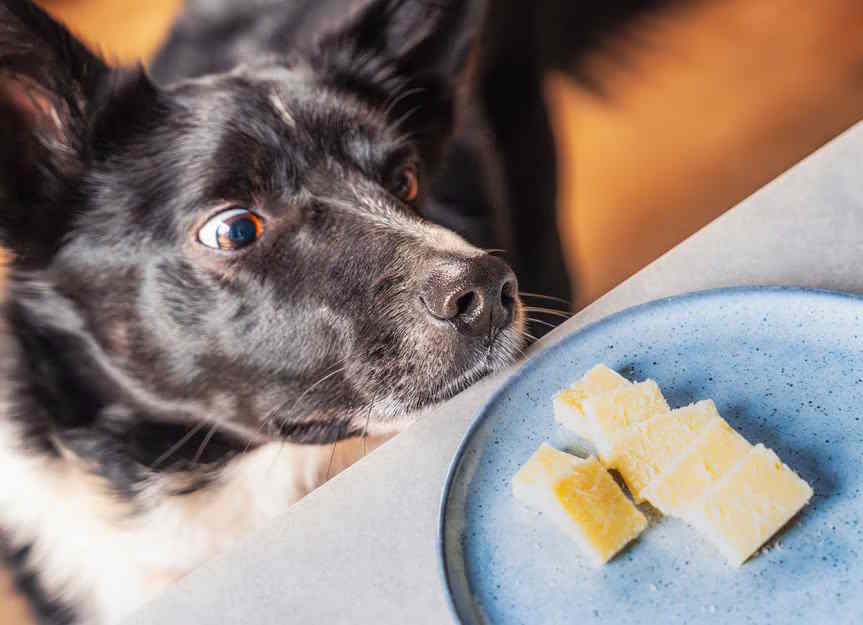
Cheese is one of the most popular training treats around, and if you have ever tried to hide a tablet in a bit of cheddar, you will know exactly why dogs tend to go mad for it. But can dogs eat cheese safely, and is it something you should be giving them regularly? The answer is a qualified yes for most dogs, though there are a few things worth bearing in mind.
Cheese contains protein, calcium, and a range of vitamins including A and B12. In small quantities it is not harmful for most dogs, and its strong smell and flavour make it particularly effective as a high-value training reward. It is not a food you need to feel guilty about using, as long as you keep the amounts sensible. Dogs with dental problems can often manage soft cheeses more comfortably than harder varieties.
The Lactose Question
Dogs are not well equipped to digest lactose, the sugar found in dairy products. Many dogs are lactose intolerant to some degree, which means that too much dairy can lead to digestive upset, gas, loose stools, or vomiting. Cheese generally contains less lactose than milk, which is why most dogs tolerate it better, but it is still something to be aware of. Start with a small amount and see how your dog responds before making it a regular treat.
If your dog shows any signs of digestive discomfort after eating cheese, it is worth cutting it out and speaking to your vet. Recurring digestive issues may point to a broader intolerance or an underlying condition such as gastroenteritis that is worth investigating properly.
Which Cheeses Are Safe?
Plain, low-fat cheeses are the best options. Cheddar, mozzarella, and cottage cheese are all commonly used as dog treats and are relatively well tolerated. Cottage cheese is particularly low in lactose and fat, making it one of the more sensible choices. Avoid anything blue-veined such as stilton or gorgonzola, as these contain roquefortine C, which is toxic to dogs. Cheese with added herbs, garlic, or onion is also off the table, since both garlic and onion are harmful to dogs.
Cheese and Dog Weight
Cheese is high in fat and calories, which makes it a treat rather than a staple. Too much over time will contribute to weight gain, which in turn puts extra pressure on joints and can worsen conditions like hip dysplasia in dogs. Keeping treats to around ten percent of your dog’s daily calorie intake is a useful rule of thumb, and cheese should sit within that allowance rather than on top of it.
Dogs with heart conditions or those on a low-fat diet should avoid cheese entirely, or use only very small amounts of low-fat varieties under veterinary guidance. The same applies to dogs with pancreatitis, where high-fat foods can trigger a flare.
Using Cheese for Training
If you are using cheese as a training treat, cut it into very small pieces. You do not need much to get a dog’s attention, and keeping the pieces tiny means you can use it more generously during a session without going over on calories. Soft cheeses can be spread thinly on a lick mat as a longer-lasting reward, which works particularly well for dogs that need mental stimulation or are anxious during grooming or nail trims.
For more on what dogs can and cannot eat, take a look at our guides on can dogs eat fruit and can dogs eat vegetables. And if you want to make sure your dog is covered for unexpected health issues, you can compare dog insurance options at Quote & Save.
The Short Answer
Can dogs eat cheese? Yes, most dogs can enjoy small amounts of plain, low-fat cheese without any issues. Avoid blue cheese and anything containing garlic or onion, keep portions modest, and watch for any signs of digestive upset. Used sensibly, cheese is a perfectly decent occasional treat.